Chapter 34: Quinolones

Fluoroquinolone Antimicrobial Agents

Author

Russell E. Lewis

Link to HTML slides

Link to recorded lecture

1 Short View Summary

1.1 Usual Adult Doses

Quinolone dosing summary
Quinolone Route Dose
Norfloxacin PO 400 mg every 12 hours
Ciprofloxacin PO 250–750 mg every 12 hours
Ciprofloxacin IV 200–400 mg every 12 hours
Ofloxacin PO/IV 200–400 mg every 12 hours
Levofloxacin PO/IV 250–750 mg daily
Moxifloxacin PO/IV 400 mg daily
Gemifloxacin PO 320 mg daily
Delafloxacin PO 450 mg every 12 hours
Delafloxacin IV 300 mg every 12 hours
ImportantRenal and Hepatic Adjustment

Decrease dose in renal failure for all quinolones except moxifloxacin. CSF penetration is generally low.

1.2 Adverse Effects Overview

Common adverse effects:

  • Gastrointestinal upset
  • Central nervous system stimulation

Less common but serious:

  • Seizures
  • Tendinitis and tendon rupture
  • Clostridioides difficile disease
  • Dysglycemia
  • Exacerbations of myasthenia gravis
  • Peripheral neuropathy
WarningContraindications

Prior quinolone allergy and prior neuropathy are contraindications to quinolone use.

1.3 Drug-Drug Interactions

  • Do not take oral formulations with aluminum-, calcium-, magnesium-, or iron-containing compounds
  • Avoid other agents that prolong the QT interval (particularly with moxifloxacin)
  • Avoid concomitant use of tizanidine
  • Variable interactions occur with warfarin; monitor INR

2 FDA-Approved Indications

2.1 Norfloxacin

Uncomplicated and complicated urinary tract infections, prostatitis, and urethral/cervical gonorrhea (only if isolates are known to be susceptible).

2.2 Ciprofloxacin

Complicated and uncomplicated UTIs, chronic bacterial prostatitis, complicated intra-abdominal infections, bacterial diarrhea, typhoid fever, acute bacterial sinusitis, lower respiratory tract infections (when not caused by S. pneumoniae), inhalational anthrax, skin and skin structure infections, and bone and joint infections.

2.3 Ofloxacin

Complicated and uncomplicated UTIs, bacterial prostatitis, nongonococcal urethritis and cervicitis caused by Chlamydia trachomatis, acute pelvic inflammatory disease, acute bacterial exacerbations of chronic bronchitis, community-acquired pneumonia, and uncomplicated skin and skin structure infections.

2.4 Levofloxacin

Complicated and uncomplicated UTIs, acute pyelonephritis, chronic bacterial prostatitis, acute bacterial exacerbations of chronic bronchitis, community-acquired pneumonia, hospital-acquired pneumonia, inhalational anthrax, acute bacterial sinusitis, and complicated and uncomplicated skin and skin structure infections.

2.5 Moxifloxacin

Community-acquired pneumonia, acute bacterial exacerbation of chronic bronchitis, acute bacterial sinusitis, and multidrug-resistant tuberculosis (off-label use).

2.6 Gemifloxacin

Community-acquired pneumonia and acute bacterial exacerbations of chronic bronchitis.

2.7 Delafloxacin

Acute bacterial skin and skin structure infections.

3 Mechanism of Action

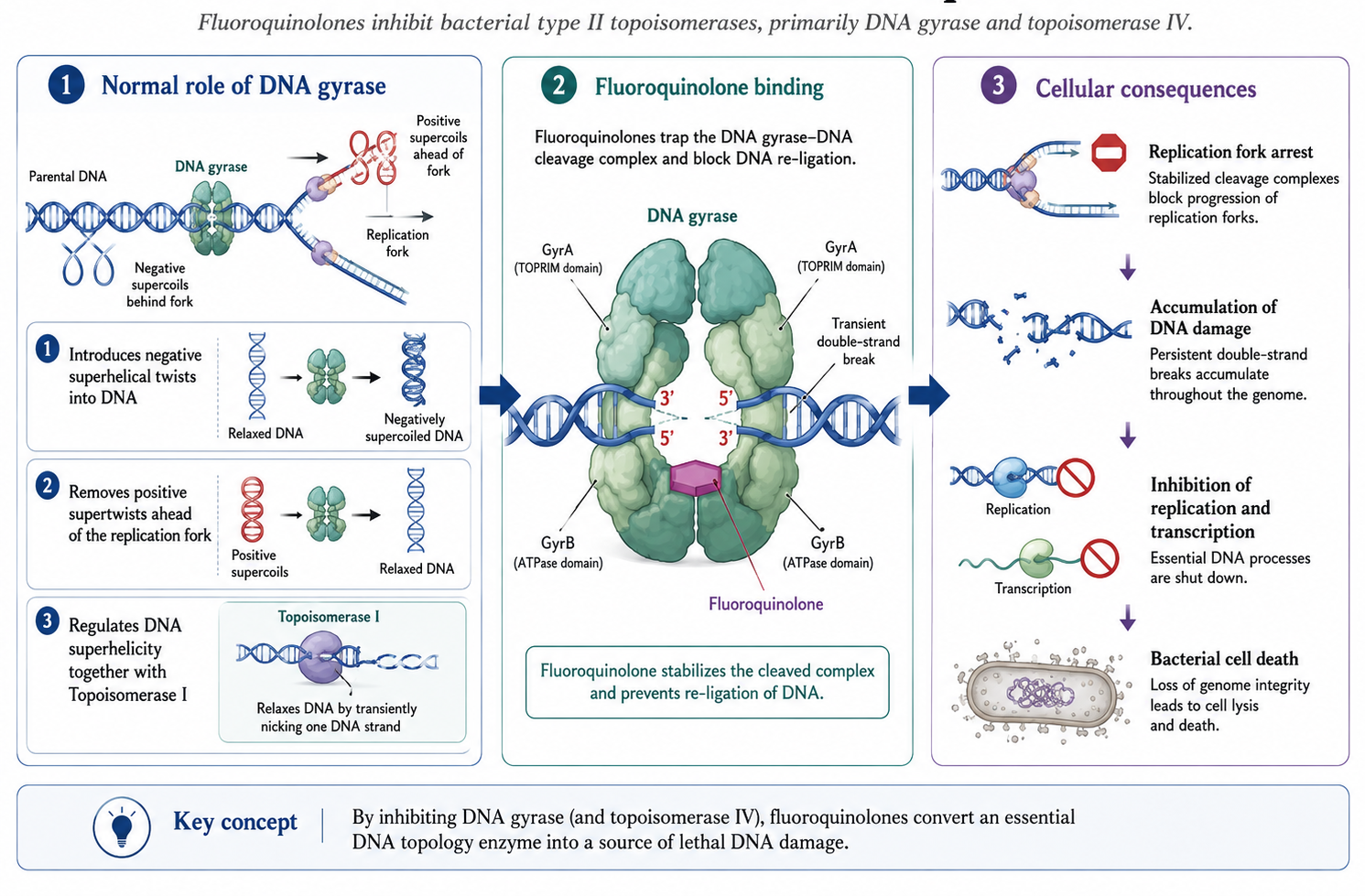
Quinolones rapidly inhibit bacterial DNA synthesis, leading to bacterial cell death. The molecular targets are two members of the topoisomerase class of enzymes: DNA gyrase and topoisomerase IV [1,2].

3.1 Quinolone Structures

The quinolone nucleus and key structural modifications are shown in Figure 1.
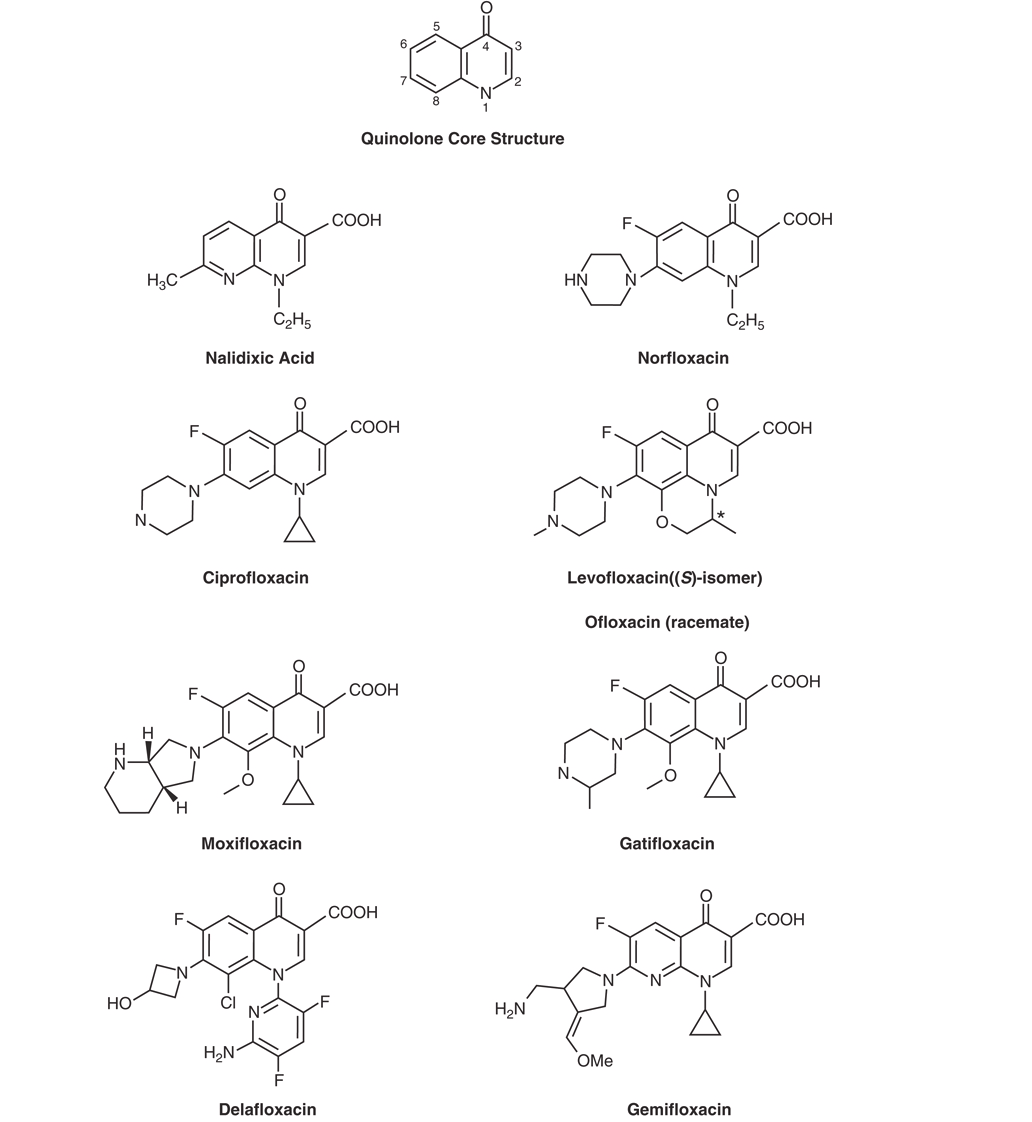
Figure 1: Quinolone chemical structures

3.2 DNA Gyrase

DNA gyrase is an essential bacterial enzyme composed of two A and two B subunits (products of the gyrA and gyrB genes) [3]. Its functions include:

  • Introduction of negative superhelical twists into chromosomal and plasmid DNA
  • Removal of positive superhelical twists ahead of the DNA replication fork
  • Regulation of DNA superhelicity (along with topoisomerase I)
Figure 2: DNA gyrase function and quinolone mechanism of action
NoteType II Topoisomerases

DNA gyrase activities result from coordinated breaking of both strands of duplex DNA, passage of another segment of DNA through the break, and resealing—the defining mechanism of type II topoisomerases.

3.3 Topoisomerase IV

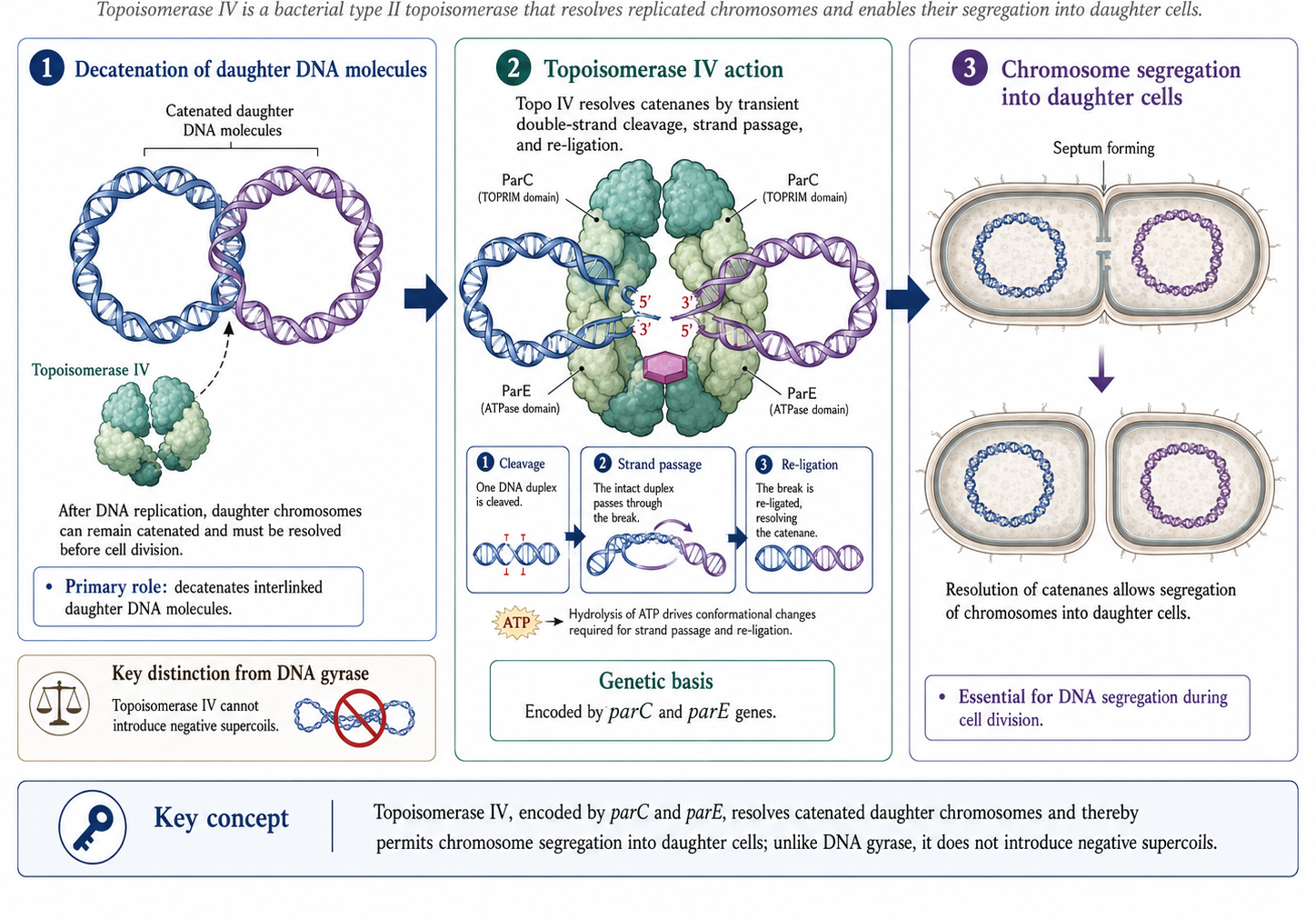
Topoisomerase IV is another type II topoisomerase composed of two subunits encoded by parC and parE genes [4]. It functions to:

  • Resolve (decatenate) interlinked daughter DNA molecules resulting from circular DNA replication
  • Allow segregation of DNA into daughter cells
Figure 3: Topoisomerase IV decatenation function
TipSpecies Variation

Some pathogens (e.g., M. tuberculosis, T. pallidum) lack topoisomerase IV, in which case gyrase serves both functions.

3.4 Mechanism of Bacterial Killing

Quinolones inhibit enzyme function by:

  1. Blocking resealing of DNA double-stranded breaks
  2. Stabilizing covalent enzyme-DNA complexes
  3. Creating barriers to DNA replication fork and transcription complexes
  4. Converting to permanent double-stranded DNA breaks

Quinolones bind specifically to the complex of DNA gyrase and DNA (not to DNA gyrase alone). Single gyrA or gyrB mutations can produce quinolone resistance [5].

3.5 Primary vs Secondary Targets

Primary quinolone targets by bacterial type
Bacterial Type Primary Target Secondary Target
Gram-negative bacteria DNA gyrase Topoisomerase IV
Gram-positive bacteria Topoisomerase IV DNA gyrase

4 Mechanisms of Acquired Bacterial Resistance

Bacteria acquire resistance to quinolones through several mechanisms [6,7]:

4.1 Chromosomal Mutations

4.1.1 Target Enzyme Alterations

Alterations in the A subunit of DNA gyrase causing resistance are clustered between amino acids 67–106 near the active site (tyrosine-122). Changes in serine-83 (to leucine or tryptophan) are most common and cause the largest increment in resistance.

NoteStepwise Resistance

High-level resistance develops through sequential mutations in gyrA/gyrB and parC/parE genes, with first mutations occurring in the more sensitive target enzyme.

4.1.2 Altered Drug Transport

Efflux pumps in gram-negative bacteria:

  • AcrAB-TolC (E. coli)
  • MexAB-OprM, MexCD-OprJ, MexEF-OprN, MexXY-OprM (P. aeruginosa)
  • CmeABC (Campylobacter jejuni)
  • OqxAB-TolC (K. pneumoniae)
  • AdeABC, AdeFGH (A. baumannii)

These RND-family pumps have broad substrate profiles, contributing to multidrug resistance [8,9].

Efflux pumps in gram-positive bacteria:

  • NorA, NorB, NorC (S. aureus)
  • PmrA (S. pneumoniae)
  • MdeA, SdrM, QacB(III), LmrS (S. aureus)

4.2 Plasmid-Mediated Resistance

WarningClinical Significance

Although plasmid-mediated resistance alone usually causes only low-level resistance, it facilitates selection of chromosomal mutations and increases resistance prevalence.

4.2.1 Qnr Proteins

The qnr genes encode pentapeptide repeat proteins that protect DNA gyrase and topoisomerase IV from quinolone action. Seven families exist: qnrA, qnrB, qnrS, qnrC, qnrD, qnrE, and qnrVC [1012].

4.2.2 Modifying Enzymes

AAC(6’)-Ib-cr: A variant aminoglycoside acetyltransferase that acetylates the piperazinyl nitrogen of ciprofloxacin and norfloxacin, causing 3–4-fold MIC increases [13].

4.2.3 Plasmid-Encoded Efflux Pumps

  • OqxAB: Resistance to olaquindox, nalidixic acid, and ciprofloxacin
  • QepA: Resistance to ciprofloxacin and erythromycin

5 Antimicrobial Activity

5.1 Gram-Negative Activity

Quinolones are most active against aerobic gram-negative bacilli, particularly Enterobacterales and Haemophilus spp., and against gram-negative cocci (Neisseria spp., Moraxella catarrhalis) [14].

TipCiprofloxacin for Pseudomonas

Ciprofloxacin remains the most potent fluoroquinolone against gram-negative bacteria. Only ciprofloxacin and levofloxacin have sufficient activity against P. aeruginosa.

5.2 Gram-Positive Activity

Activity against streptococci varies among quinolones:

  • Limited activity: Norfloxacin, ciprofloxacin, ofloxacin
  • Enhanced activity: Levofloxacin, moxifloxacin, gemifloxacin, delafloxacin

Gemifloxacin and delafloxacin are especially potent against S. pneumoniae and S. aureus, respectively.

Gram-positive MIC90 values (μg/mL)
Organism Cipro Levo Moxi Gemi Dela
MSSA 0.5 0.25 0.12 0.06 0.008
MRSA ≥32 16 4 8 0.5
S. pneumoniae 2 1 0.25 0.06 0.015

5.3 Anaerobic Activity

Moxifloxacin, delafloxacin, and sitafloxacin have increased potency against anaerobes.

Anaerobic activity comparison (MIC90 μg/mL)
Agent B. fragilis MIC90
Ciprofloxacin 4–64
Levofloxacin 2–>16
Moxifloxacin 0.5–8
Delafloxacin 0.12

5.4 Mycobacterial Activity

Ciprofloxacin, ofloxacin, levofloxacin, gatifloxacin, and moxifloxacin are active against:

  • M. tuberculosis
  • M. fortuitum
  • M. kansasii
  • Some strains of M. chelonae and M. abscessus
Mycobacterial MIC values (μg/mL)
Agent M. tuberculosis M. avium M. fortuitum
Ciprofloxacin 1 16 0.3–>4
Levofloxacin 0.25–1 0.5–64 0.06–2
Moxifloxacin 0.125–0.5 0.5–16 0.06–1
NoteTuberculosis Treatment

Fluoroquinolones added to standard TB therapy increased bactericidal activity but failed to shorten treatment duration or improve survival in tuberculous meningitis [15,16].

5.5 Atypical Pathogens

All fluoroquinolones have activity against:

  • Legionella pneumophila
  • Mycoplasma pneumoniae
  • Chlamydia pneumoniae
  • Chlamydia trachomatis
  • Ureaplasma urealyticum
  • Mycoplasma hominis
Atypical pathogen MIC values (μg/mL)
Organism Cipro Levo Moxi
Legionella spp. 0.016–0.06 0.016–0.03 0.06
M. pneumoniae 0.5–4 0.5–2.5 0.12–0.3
C. pneumoniae 2 0.5–1 0.06–1
C. trachomatis 0.5–2 0.25–0.5 0.06

5.6 Factors Affecting Activity

Activity is reduced by:

  • Low pH (<7)
  • High magnesium concentrations (8–16 mM)
  • Urine (though urinary concentrations usually compensate)
TipDelafloxacin Advantage

Unlike other fluoroquinolones, delafloxacin is weakly acidic, providing enhanced antibacterial potency in low-pH environments.

6 Pharmacology

6.1 Absorption

Quinolones are well absorbed from the upper GI tract with bioavailability >50% for all compounds (approaching 100% for several). Peak serum concentrations are attained within 1–3 hours [17].

Quinolone pharmacokinetic parameters
Parameter Norfloxacin Ciprofloxacin Ofloxacin Levofloxacin Moxifloxacin Gemifloxacin Delafloxacin
Dose (mg) PO 400 500 400 500 400 320 450
Cmax (μg/mL) PO 1.5 2.4 4.6 5.7 4.3 1.4 7.45
Protein binding (%) 30 30 24–52 39–52 55–73 84
Half-life (h) 3.3 4 4–5 6–8 9.5 7 4–8.5
Bioavailability (%) 50 70 >95 99 86–100 71 59

6.2 Distribution

Quinolones have high volumes of distribution, indicating tissue accumulation. Concentrations exceeding serum levels are found in:

  • Prostate tissue (0.9–2.3×)
  • Feces (100–1000×)
  • Bile (2–20×)
  • Lung tissue (1.6–6×)
  • Macrophages and neutrophils (2–>100×)
WarningCNS Penetration

CSF penetration is generally low, though fluoroquinolones penetrate better than β-lactams in the absence of meningeal inflammation [18].

6.3 Elimination

Primary elimination routes
Route Primary Mixed Minimal
Renal Ofloxacin, Levofloxacin Ciprofloxacin, Norfloxacin Moxifloxacin
Hepatic Moxifloxacin, Nalidixic acid Ofloxacin, Levofloxacin

6.4 Dosage Adjustments

ImportantRenal Dosing
  • CrCl <50 mL/min: Dose adjustment for ofloxacin, levofloxacin
  • CrCl <40 mL/min: Dose adjustment for gemifloxacin
  • CrCl <30 mL/min: Dose adjustment for norfloxacin, ciprofloxacin, delafloxacin
  • No adjustment needed: Moxifloxacin, nalidixic acid
Renal dosing adjustments
Quinolone Normal GFR 10–50 GFR <10 Dialysis
Norfloxacin 400 mg q12h 1× dose q24h 1× dose q24h No (H, P)
Ciprofloxacin 250–750 mg q12h 1× dose q18h 1× dose q24h No (H, P)
Ofloxacin 200–400 mg q12h 1× dose q24h ½ dose q24h No (H, P)
Levofloxacin 250–750 mg q24h ½ dose q24h ½ dose q48h No (H, P)
Moxifloxacin 400 mg q24h No change No change No (H, P)

6.5 Drug Interactions

WarningAbsorption Interactions

Aluminum-, magnesium-, and calcium-containing antacids, sucralfate, iron supplements, and zinc-containing multivitamins markedly reduce quinolone absorption. Take quinolones 2 hours before or 2–6 hours after these agents [19].

CYP1A2 interactions (primarily ciprofloxacin):

  • Theophylline: 30% reduced clearance, 20–90% increased serum levels
  • Caffeine: Increased levels
  • Tizanidine: Increased CNS and hypotensive effects
  • Clozapine: Increased serum levels

Other interactions:

  • Warfarin: Variable effects; monitor INR
  • NSAIDs: May potentiate CNS stimulant effects
  • Rifampicin: Reduces moxifloxacin levels

7 Clinical Uses

7.1 Urinary Tract Infections

Quinolones are highly effective for UTIs, with urinary concentrations providing substantial therapeutic ratios against most pathogens [20,21].

Uncomplicated cystitis:

  • 3-day courses of norfloxacin, ciprofloxacin, or ofloxacin achieve 81–96% cure rates
  • Comparable to TMP-SMX and nitrofurantoin
  • Single-dose therapy: 75–96% eradication

Acute pyelonephritis:

  • 7–10 day courses achieve bacteriologic cure rates comparable to or better than TMP-SMX
  • Levofloxacin and ciprofloxacin: 95% eradication rates
NoteS. saprophyticus

For S. saprophyticus infections, 7-day regimens are preferred due to failures with shorter courses.

7.2 Prostatitis

Fluoroquinolones achieve therapeutic concentrations in prostatic tissue and are first-line for chronic bacterial prostatitis. Treatment duration: 4–6 weeks [22].

7.3 Sexually Transmitted Infections

WarningGonorrhea Resistance

Due to increasing resistance, quinolones are no longer recommended for empirical treatment of gonorrhea in most areas. Use only if susceptibility is confirmed [23].

Quinolones remain effective for:

  • Nongonococcal urethritis/cervicitis (C. trachomatis)
  • Pelvic inflammatory disease (with anaerobic coverage)

7.4 Gastrointestinal Infections

Bacterial diarrhea:

  • Shigella spp.: Treatment of choice
  • Salmonella spp.: Indicated for severe disease
  • Traveler’s diarrhea: Effective empirical therapy

Typhoid fever:

  • Fluoroquinolones effective but resistance increasing
  • Consider alternatives in areas with high resistance

7.5 Respiratory Tract Infections

Community-acquired pneumonia:

Respiratory fluoroquinolones (levofloxacin, moxifloxacin, gemifloxacin) are effective monotherapy covering:

  • Typical pathogens (S. pneumoniae, H. influenzae)
  • Atypical pathogens (Legionella, Mycoplasma, Chlamydia)
TipCAP Guidelines

Reserve respiratory fluoroquinolones for patients with comorbidities, recent antibiotic use, or in areas with high macrolide resistance [24,25].

COPD exacerbations:

Fluoroquinolones effective against common pathogens including P. aeruginosa.

Hospital-acquired pneumonia:

Ciprofloxacin or levofloxacin may be used, often in combination therapy, particularly for Pseudomonas coverage.

7.6 Skin and Soft Tissue Infections

  • Delafloxacin: FDA-approved for acute bacterial SSTI
  • Effective against MSSA; variable activity against MRSA
  • Consider for diabetic foot infections (often polymicrobial)

7.7 Bone and Joint Infections

Fluoroquinolones achieve adequate bone concentrations and have good oral bioavailability, allowing transition from IV to oral therapy [26,27].

NoteCombination Therapy

For Staphylococcus osteomyelitis, combination with rifampin may be considered, though interactions require dose adjustment.

7.8 Mycobacterial Infections

Tuberculosis:

  • Moxifloxacin and levofloxacin used in MDR-TB regimens
  • Not recommended for drug-sensitive TB treatment shortening

Nontuberculous mycobacteria:

  • Activity variable by species and drug
  • Best activity against M. fortuitum and M. kansasii

8 Adverse Effects

8.1 Gastrointestinal

Most common adverse effects (1–5%):

  • Nausea, vomiting
  • Diarrhea
  • Abdominal discomfort
WarningC. difficile Risk

All antibiotics increase C. difficile infection risk. Quinolones have been associated with outbreaks of the hypervirulent NAP1/BI/027 strain [28].

8.2 Central Nervous System

CNS effects occur in 1–4% of patients:

  • Headache, dizziness
  • Insomnia, restlessness
  • Rarely: seizures (particularly with high doses, renal impairment, or concurrent NSAIDs) [28]

8.3 Musculoskeletal

ImportantFDA Black Box Warning

Fluoroquinolones are associated with tendinitis and tendon rupture, particularly in patients >60 years, those on corticosteroids, and organ transplant recipients. The Achilles tendon is most commonly affected [29].

Risk factors:

  • Age >60 years
  • Corticosteroid use
  • Organ transplantation
  • Renal impairment
  • Intense physical activity

8.4 Cardiac

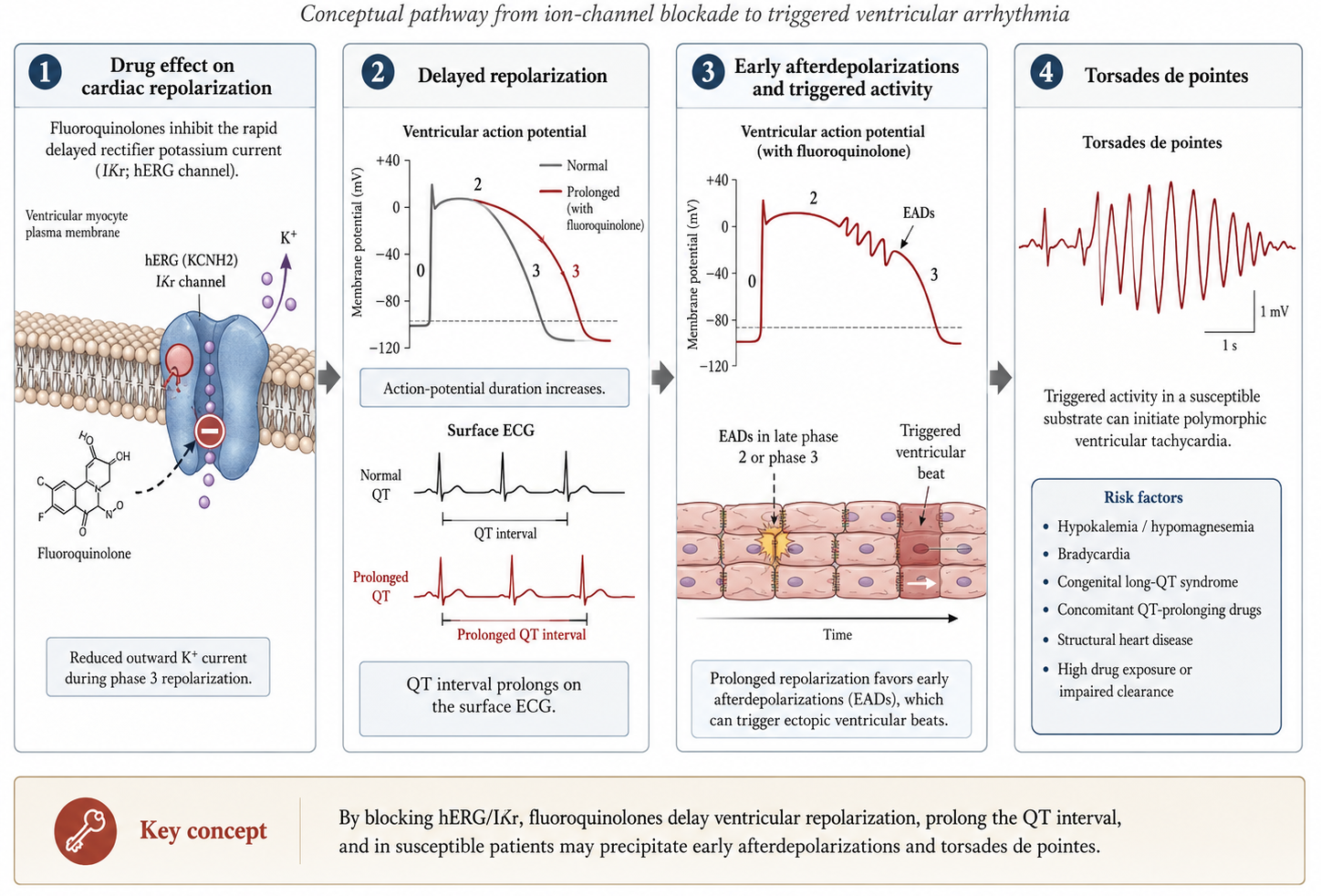
QT prolongation is a class effect, varying by agent [30]:

Figure 4: QT prolongation risk with quinolones
  • Highest risk: Moxifloxacin
  • Moderate risk: Levofloxacin, ofloxacin
  • Lower risk: Ciprofloxacin
WarningAvoid in QT Prolongation

Avoid quinolones (especially moxifloxacin) in patients with:

  • Congenital long QT syndrome
  • Uncorrected hypokalemia or hypomagnesemia
  • Concurrent QT-prolonging drugs

8.5 Dysglycemia

Both hypo- and hyperglycemia reported, particularly with [31]:

  • Gatifloxacin (withdrawn from systemic use)
  • Concurrent use of hypoglycemic agents

8.6 Peripheral Neuropathy

ImportantFDA Warning

Peripheral neuropathy may occur rapidly (within days) and may be irreversible. Discontinue immediately if symptoms develop [31].

8.7 Photosensitivity

More common with some agents (lomefloxacin, sparfloxacin) than others. Advise sun protection.

8.8 Hepatotoxicity

Rare but serious. Trovafloxacin withdrawn due to hepatotoxicity.

8.9 Special Populations

Pediatrics: Generally avoided due to concerns about cartilage toxicity, though ciprofloxacin approved for specific indications [28].

Pregnancy: Category C; avoid unless no alternatives.

Myasthenia gravis: May exacerbate muscle weakness; avoid or use with caution.

9 Summary

Fluoroquinolones remain valuable antimicrobial agents with broad-spectrum activity and excellent oral bioavailability. Key considerations include:

  1. Spectrum: Best against gram-negative organisms; newer agents have enhanced gram-positive and anaerobic activity
  2. Resistance: Increasing resistance limits empirical use for some infections (gonorrhea, Salmonella)
  3. Safety: FDA warnings regarding tendinopathy, peripheral neuropathy, and CNS effects require careful patient selection
  4. Drug interactions: Absorption interactions with divalent cations; CYP1A2 interactions primarily with ciprofloxacin

9.1 Agent Selection Summary

Agent selection by clinical scenario
Clinical Scenario Preferred Agent(s)
Pseudomonas infection Ciprofloxacin, Levofloxacin
CAP/Respiratory Levofloxacin, Moxifloxacin
SSTI (including MRSA) Delafloxacin
UTI/Prostatitis Ciprofloxacin, Levofloxacin
Renal impairment Moxifloxacin
Cardiac risk Ciprofloxacin
Anaerobic coverage needed Moxifloxacin
TipStewardship Principles

Use fluoroquinolones judiciously, reserving them for appropriate indications and avoiding use when safer alternatives exist, particularly for uncomplicated infections.

References

1.
Drlica K, Hooper DC. Mechanisms of quinolone action. In: Hooper DC, Rubinstein E, editors. Quinolone antimicrobial agents. 3rd ed. Washington, D.C.: ASM Press; 2003. pp.19–40.
2.
Wang JC. DNA topoisomerases. Annu Rev Biochem 1996;65:635–692.
3.
Drlica K, Zhao XL. DNA gyrase, topoisomerase IV, and the 4-quinolones. Microbiol Rev 1997;61:377–392.
4.
Kato J, Nishimura Y, Imamura R, Niki H, Hiraga S, Suzuki H. New topoisomerase essential for chromosome segregation in e. coli. Cell 1990;63:393–404.
5.
Kohanski MA, Dwyer DJ, Hayete B, Lawrence CA, Collins JJ. A common mechanism of cellular death induced by bactericidal antibiotics. Cell 2007;130:797–810.
6.
Jacoby GA. Mechanisms of resistance to quinolones. Clin Infect Dis 2005;41:S120–S126.
7.
Hooper DC, Jacoby GA. Topoisomerase inhibitors: Fluoroquinolone mechanisms of action and resistance. Cold Spring Harb Perspect Med 2016.
8.
Poole K. Efflux-mediated resistance to fluoroquinolones in gram-negative bacteria. Antimicrob Agents Chemother 2000;44:2233–2241.
9.
Piddock LJV. Clinically relevant chromosomally encoded multidrug resistance efflux pumps in bacteria. Clin Microbiol Rev 2006;19:382–402.
10.
Martínez-Martínez L, Pascual A, Jacoby GA. Quinolone resistance from a transferable plasmid. Lancet 1998;351:797–799.
11.
Tran JH, Jacoby GA. Mechanism of plasmid-mediated quinolone resistance. Proc Natl Acad Sci USA 2002;99:5638–5642.
12.
Strahilevitz J, Jacoby GA, Hooper DC, Robicsek A. Plasmid-mediated quinolone resistance: A multifaceted threat. Clin Microbiol Rev 2009;22:664–689.
13.
Robicsek A, Strahilevitz J, Jacoby GA, others. Fluoroquinolone modifying enzyme: A novel adaptation of a common aminoglycoside acetyltransferase. Nature Medicine 2006;12:83–88.
14.
Eliopoulos CT, Eliopoulos GM. Activity in vitro of the quinolones. In: Hooper DC, Rubinstein E, editors. Quinolone antimicrobial agents. 3rd ed. Washington, D.C.: ASM Press; 2003. pp.91–111.
15.
Gillespie SH, Crook AM, McHugh TD, others. Four-month moxifloxacin-based regimens for drug-sensitive tuberculosis. N Engl J Med 2014;371:1577–1587.
16.
Heemskerk AD, Bang ND, Mai NT, others. Intensified antituberculosis therapy in adults with tuberculous meningitis. N Engl J Med 2016;374:124–134.
17.
Dudley MN. Pharmacokinetics of fluoroquinolones. In: Hooper DC, Rubinstein E, editors. Quinolone antimicrobial agents. 3rd ed. Washington, D.C.: ASM Press; 2003. pp.115–132.
18.
Nau R, Sorgel F, Eiffert H. Penetration of drugs through the blood-cerebrospinal fluid/blood-brain barrier for treatment of central nervous system infections. Clin Microbiol Rev 2010;23:858–883.
19.
Radandt JM, Marchbanks CR, Dudley MN. Interactions of fluoroquinolones with other drugs: Mechanisms, variability, clinical significance, and management. Clin Infect Dis. 1992. pp.272–284.
20.
Gupta K, Hooton TM, Naber KG, others. International clinical practice guidelines for the treatment of acute uncomplicated cystitis and pyelonephritis in women: A 2010 update by the infectious diseases society of america and the european society for microbiology and infectious diseases. Clin Infect Dis 2011;52:e103–e120.
21.
Hooton TM, Roberts PL, Cox ME, Stapleton AE. Voided midstream urine culture and acute cystitis in premenopausal women. N Engl J Med 2013;369:1883–1891.
22.
Naber KG, Schaeffer AJ, Hynes CF, Matsumoto T, Shoskes DA, Bjerklund Johansen TE. EAU/AUA guidelines for chronic bacterial prostatitis and chronic pelvic pain syndrome in men. Eur Urol 2008;54:764–771.
23.
Hooper DC, Wolfson JS. Treatment of genitourinary tract infections with fluoroquinolones: Clinical efficacy in genital infections and adverse effects. Antimicrob Agents Chemother 1989;33:1662–1667.
24.
Mandell LA, Wunderink RG, Anzueto A, others. Infectious diseases society of america/american thoracic society consensus guidelines on the management of community-acquired pneumonia in adults. Clin Infect Dis 2007;44:S27–S72.
25.
Metlay JP, Waterer GW, Long AC, others. Diagnosis and treatment of adults with community-acquired pneumonia. An official clinical practice guideline of the american thoracic society and infectious diseases society of america. Am J Respir Crit Care Med 2019;200:e45–e67.
26.
Berbari EF, Kanj SS, Kowalski TJ, others. 2015 infectious diseases society of america (IDSA) clinical practice guidelines for the diagnosis and treatment of native vertebral osteomyelitis in adults. Clin Infect Dis 2015;61:e26–e46.
27.
Lipsky BA, Berendt AR, Deery HG, others. Diagnosis and treatment of diabetic foot infections. Clin Infect Dis 2004;39:885–910.
28.
Lode H, Rubinstein E. Adverse effects. In: Hooper DC, Rubinstein E, editors. Quinolone antimicrobial agents. 3rd ed. Washington, D.C.: ASM Press; 2003. pp.407–419.
29.
Stahlmann R, Lode HM. Risks associated with the therapeutic use of fluoroquinolones. Expert Opin Drug Saf 2013;12:497–505.
30.
Yap YG, Camm AJ. QT prolongation with quinolone antimicrobial agents. In: Hooper DC, Rubinstein E, editors. Quinolone antimicrobial agents. 3rd ed. Washington, D.C.: ASM Press; 2003. pp.421–440.
31.
FDA Drug Safety Communication. FDA reinforces safety information about serious low blood sugar levels and mental health side effects with fluoroquinolone antibiotics. FDA 2018.